
Go Escape! - Casual Ball Games
CASUAL AZUR GAMESArcade
3.99.24K Reviews
- Version
- 2.45.03
- Installs
- 10.00M
- Age Rating
- Everyone
Screenshots
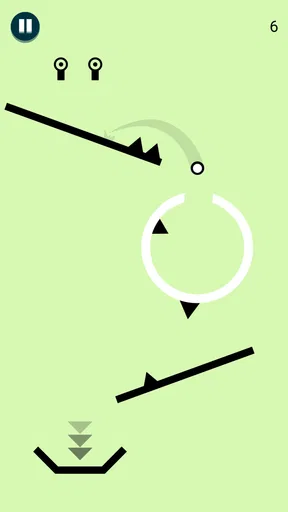
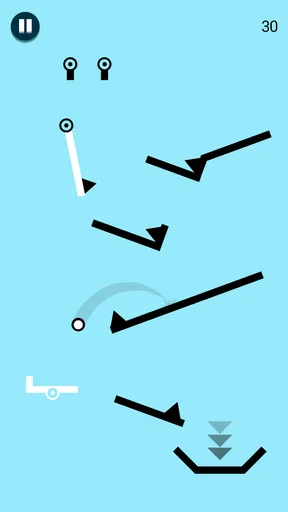
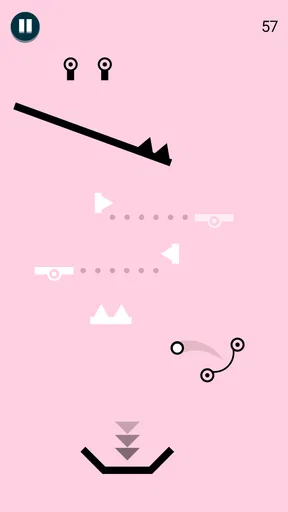
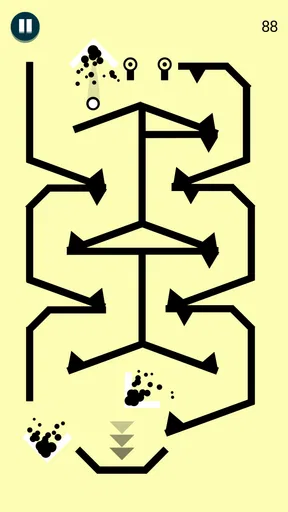
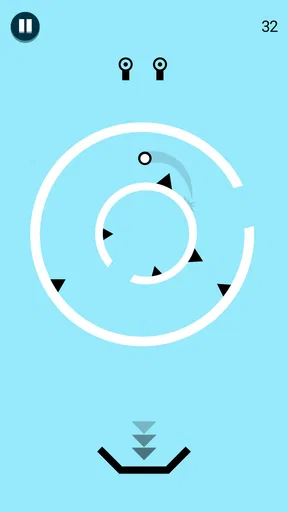
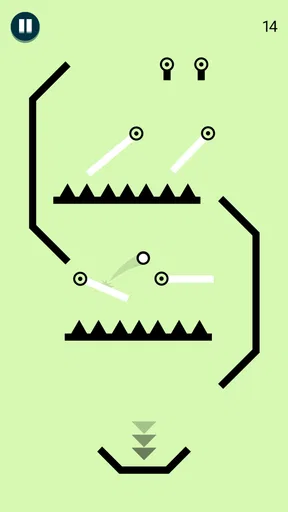
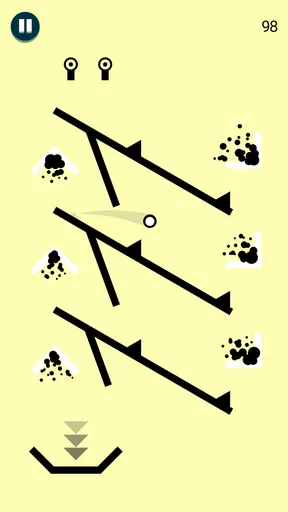
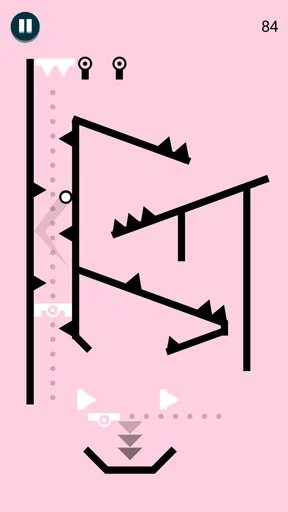
Our Review of Go Escape! - Casual Ball Games
 Analysis by Appyee
I first approached Go Escape! - Casual Ball Games expecting a quick arcade distraction, and that is exactly where it makes the most sense. The idea is easy to understand: guide a bouncing ball across platforms, avoid hazards, and reach the finish. What makes the experience work is not a complicated rule set, but the way a simple movement pattern turns small mistakes into immediate retries.
This is a free arcade game from CASUAL AZUR GAMES, suitable for Everyone and available on Android devices running Android 7.0 or later. It has grown into a widely played title, with over ten million installs, a 3.9 average from around 139 thousand ratings, and roughly 9.2 thousand written reviews. Those figures suggest a game with a broad audience, although they also tell me to keep expectations realistic: this is designed as a lightweight pick-up-and-play experience rather than a deep arcade campaign.
How the game feels when you play for a few minutes
The first strength is its low barrier to entry. I do not need to study a tutorial or learn a collection of controls before starting. The ball’s automatic bouncing creates the rhythm, while my job is to react to platforms and obstacles. That makes the opening moments approachable for children, casual players, and anyone who wants something that can be understood almost immediately.
There is also a useful tension in the control scheme. Because the ball is already moving, I am not simply choosing a direction at my leisure. I have to read the next section, judge the timing, and commit before the opportunity disappears. A platform that looks safe at first can become awkward if I approach it from the wrong angle or fail to prepare for the following obstacle.
The real appeal is the short retry loop. A failed attempt does not feel like the end of a long investment. I can try again quickly, adjust one decision, and see whether that correction works. This is why the game fits short breaks better than many larger arcade titles. It can occupy a few spare minutes without demanding that I remember a complicated story, manage a large inventory, or return to a lengthy mission.
Speed expectations and the value of immediate play
In practical terms, this is the kind of game I would open while waiting for an appointment, sitting on public transport, or taking a brief break from work. Its premise does not require preparation, and the short-form challenge structure makes it easy to stop after a single attempt. If I only want a quick test of timing, it gets me into the action faster than a platform game built around exploration or extended levels.
That simplicity also shapes its limits. Players who want several control styles, character development, narrative progression, or a large world to explore may find the experience too narrow. The game concentrates on bouncing, avoiding, and reaching the goal. I appreciate that focus, but I would not mistake it for a full-featured platform adventure.
The pace is most enjoyable when I treat each section as a small timing puzzle rather than rushing blindly. A useful habit is to watch the ball’s current path before making a correction. Reacting to the nearest platform alone can create a poor landing for the next move. Looking one step ahead gives me a better chance of maintaining a clean run, especially when the layout becomes less forgiving.
What happens during repeated attempts
Repeated play exposes the game’s main design trade-off. The controls are easy to grasp, but success can depend heavily on timing. That means the experience may feel fair when I understand why I failed, yet frustrating when a mistake seems to happen faster than I can interpret it. I found the best approach was to change one action at a time instead of making a completely different series of movements after every failure.
This is also where the title can become more demanding than its casual presentation suggests. A player may begin with the expectation of effortless bouncing, then discover that later attempts require concentration. It remains accessible in concept, but accessibility does not mean every section is relaxed. Anyone who dislikes retry-based arcade play should know that the central satisfaction comes from correcting errors, not from progressing without interruption.
For everyday use, I would play it in short sessions rather than treating it as a background game. The ball’s movement rewards attention, so it is not a good choice while walking, multitasking, or trying to follow a conversation. A quiet two-minute break is a better setting than a crowded moment in which I can only glance at the screen.
Heavy-use moments and resource expectations
Because the core activity is compact and focused on a bouncing ball moving through platforms, I would place it closer to a lightweight arcade option than to a demanding action game. There is no reason to expect the same kind of sustained workload associated with large three-dimensional environments or long multiplayer sessions. That makes it a sensible candidate for quick play on a range of compatible Android phones.
Still, “lightweight” should not be read as a guarantee that every device will feel identical. Screen responsiveness, background activity, and the general condition of a phone can affect how comfortable timing-based play feels. A small delay matters more in an arcade game than it would in a turn-based puzzle. If the device is already busy with other tasks, I would close unnecessary apps before judging the game’s responsiveness.
Longer sessions can also expose practical annoyances that are easy to miss during a first launch. Repeated tapping and concentration may make the experience feel more tiring than its cheerful presentation suggests. I prefer using it in bursts, because the quick-retry structure remains fresh that way. Playing for a long stretch can turn the same focused loop into repetition, particularly if I am stuck on one difficult section.
The free entry point is helpful for testing whether the style suits me. The game includes in-app purchases ranging from $0.99 to $2.99 per item, so I would approach optional spending carefully. For a title built around short arcade attempts, I would first play without buying anything and decide whether the basic loop already provides enough enjoyment. That is especially sensible for parents considering it for a child, even though the age rating is Everyone.
Reliability, recovery, and returning to a session
From a user’s point of view, the most important recovery question is whether a failed attempt feels easy to resume. This game’s compact structure works in its favor: restarting a challenge is conceptually simple because the objective remains clear. I do not have to reconstruct a complicated plan involving several systems before trying again. I can identify the mistake, reset my attention, and make another attempt.
That recovery style is different from a game that saves a large open area or tracks many simultaneous objectives. Here, the mental recovery is quick, but the emotional recovery depends on how patient I am with repetition. If I enjoy gradually improving timing, the restart loop is motivating. If I want constant novelty, the same loop may feel restrictive.
I would also recommend treating interruptions sensibly. If I receive a message or need to switch tasks, I would not assume that an active attempt should be left unattended. The safest habit is to finish or restart deliberately when returning, rather than relying on a half-completed run to remain exactly as I left it. That is ordinary good practice for a short arcade game, especially when the value of each attempt comes from concentration.
The current version is 2.45.03, which is useful to check when troubleshooting compatibility or deciding whether an update is available through the normal app store. I would keep the installation current, not because the game needs elaborate maintenance, but because updated software is generally the sensible starting point when assessing stability on a supported device.
Device constraints and who should play it
The minimum operating system is Android 7.0, so the game is not aimed exclusively at the newest phones. That broad compatibility is one of its practical advantages. Someone with an older Android device may be able to try it without replacing hardware, although the actual feel will still depend on the phone’s responsiveness and display.
For the best experience, I would choose a device with a screen that registers taps consistently and enough free attention to follow the ball’s movement. The game’s challenge is based on timing, so a comfortable display matters more than having a premium camera or a large collection of unrelated features. A stable grip is useful too; sudden movement while trying to make a precise correction can be more disruptive than the game itself.
This is a good match for casual players, younger users who understand simple timing challenges, and experienced arcade fans who enjoy retrying a short section until the movement feels right. It is also suitable for people who prefer games with an immediately visible goal. I would skip it if I need a story-driven experience, strategic depth, online competition, or a relaxed game that can be played while distracted.
Compared with endless runners, this title puts more emphasis on reaching a defined finish than on surviving for the longest possible distance. Compared with traditional platform games, it removes much of the exploration and character control, narrowing the focus to the ball’s route and the hazards ahead. That narrower design is both its identity and its main limitation. If I want a quick timing challenge, the focus is welcome; if I want variety between attempts, a broader arcade alternative may be a better fit.
Small techniques that make attempts more manageable
My first practical tip is to avoid treating every bounce as an emergency. The ball’s movement creates a rhythm, and reacting too aggressively can be just as harmful as reacting too slowly. I try to identify the next safe landing area, then make the smallest correction that keeps the route open. This reduces the tendency to oversteer after a near miss.
Second, I use failed attempts as information rather than simply as losses. If I repeatedly miss the same platform, I ask whether the problem is the timing of the approach, the direction of the correction, or the fact that I am focusing too late. That distinction matters because repeating the same reaction will not produce a different result. The game is more satisfying when I turn each failure into one specific adjustment.
Third, I avoid playing through fatigue. The controls may be simple, but the attention required for accurate timing is real. After several unsuccessful tries, a short pause can be more useful than continuing with increasingly impatient movements. This is a small but important trade-off: the game is easy to restart, yet it is not always easy to play well without focus.
For parents, I would frame it as a short arcade activity rather than an educational tool or a long-form entertainment product. The Everyone rating makes it broadly approachable, but the child’s experience may still depend on patience with repeated failure. If a child enjoys improving one attempt at a time, the format can be rewarding. If frustration arrives quickly, a gentler puzzle game may be preferable.
What I would expect from performance in daily use
My overall performance expectation is modest but positive. The game’s focused arcade structure should make it easier to use casually than a title that constantly loads large areas or asks the device to manage many systems at once. I would expect it to be most comfortable when launched on a supported phone with other demanding tasks closed, especially during timing-sensitive sections.
At the same time, I would not recommend it to someone whose main priority is maximum technical spectacle. The appeal is the interaction, not visual ambition or a large simulation. Players judging it by the standards of a console-style platformer may find it basic. Players judging it as a fast, free way to practice reactions are more likely to appreciate what it is trying to do.
The rating of 3.9 shows a generally positive but not universally enthusiastic reception. That feels consistent with my assessment: the central idea is immediately usable and easy to revisit, but the repetition and narrow scope will not suit everyone. A game can be successful at delivering a compact loop without becoming a perfect recommendation for every type of player.
My verdict after weighing the trade-offs
I recommend Go Escape! - Casual Ball Games when you want an uncomplicated arcade challenge that starts quickly and gives you a clear reason to try again. Its bouncing-ball format is approachable, its objective is easy to understand, and its short attempts fit naturally into spare moments. The free download also makes it straightforward to test before deciding whether the optional purchases are worthwhile for you.
I would be more cautious if you are searching for depth, variety, or a game that can run comfortably in the background while you do something else. Precision matters here, and repeated attempts can become tiring. The best experience comes from giving the screen your attention, making measured corrections, and accepting that progress may depend on learning from small mistakes.
In the end, I see it as a practical time-filler with a genuine timing challenge underneath its simple presentation. CASUAL AZUR GAMES has kept the concept focused rather than turning it into a crowded arcade package. That focus will appeal to players who value instant play and quick recovery, while those wanting exploration or a richer progression system should choose a different category of game. For a short, free bounce-and-avoid session on a compatible Android phone, it is worth trying.
Verdict
Strengths of Go Escape! - Casual Ball Games
- Simple one-touch controls are easy to learn.
- Short levels make it ideal for quick gaming sessions.
- Bright visuals and smooth animations feel polished.
- Increasing difficulty keeps the gameplay challenging.
- Works well for casual players of different ages.
Limitations of Go Escape! - Casual Ball Games
- Frequent ads may interrupt gameplay between levels.
- The core mechanics can feel repetitive after extended play.
- Some levels rely more on timing than strategic choices.
- Progression offers limited variety beyond the main challenge.
- Accidental taps can cause mistakes on smaller screens.
Other Releases by CASUAL AZUR GAMES
View All
Worms Zone .io - Hungry Snake
Action4.3

Stack Ball - Crash Platforms
Arcade4.5

STAR: Super Tricky Amazing Run
Arcade4.2

State.io — Conquer the World
Strategy4.1
Similar Picks in This Category
View All
Subway Surfers
SYBO Games4.6

Stickman Party 234 MiniGames
PlayMax Game Studio4.6

Subway Princess Runner
Ivy4.4

Temple Run
Imangi Studios4.2

Zombie Tsunami
Mobigame SAS4.6
Stack Ball - Crash Platforms
CASUAL AZUR GAMES4.5
Frequently Asked Questions
What is Go Escape! - Casual Ball Games?
Go Escape! is a casual arcade puzzle game centered on guiding a bouncing ball through obstacle-filled levels. The main challenge is timing your taps correctly so the ball can jump, avoid traps, and reach the finish safely. Its simple controls make it easy to start, while increasingly complex layouts require patience, concentration, and repeated attempts to master each stage.
How do you play Go Escape! - Casual Ball Games?
The game uses straightforward tap-based controls, so there is no complicated movement system to learn. Players generally tap at the right moment to make the ball jump or change its movement, avoiding spikes, gaps, and other hazards along the route. Success depends more on timing and observation than speed, and replaying a level is often necessary to learn its rhythm.
Is Go Escape! suitable for children and casual players?
Go Escape! is designed for a broad audience, including children, teenagers, and adults who enjoy short arcade challenges. The basic gameplay is easy to understand, but some levels can become demanding and may frustrate younger players who are not used to retry-based games. Parents should also review the app-store age rating and any advertising or in-app purchase information before downloading.
Does Go Escape! require an internet connection?
The core gameplay is generally suited to quick, offline-friendly sessions, which makes it convenient for commuting, waiting rooms, or other situations without reliable internet access. However, advertisements, analytics, updates, leaderboard features, or other connected services may require a connection. Availability of offline play and the behavior of ads can vary by platform and app version, so check the current store listing.
Is Go Escape! free to download, and does it contain ads or in-app purchases?
Go Escape! is typically offered as a free download, but free access may be supported by advertising and optional purchases. Ads can appear between attempts or levels, while paid options may be available for removing advertisements or unlocking certain benefits. Before installing, check the Google Play or App Store listing for the latest pricing, subscription details, permissions, and purchase information.
Play our best games!


